Latest News and Events
Published May 21st, 2013 by Raphaelle Rafin

©Moises Castillo/AP
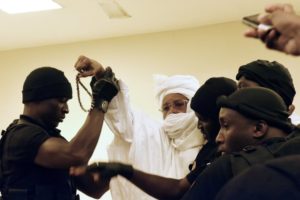
The constitutional court of Guatemala has just overturned former dictator José Efraín Ríos Montt’s conviction for genocide and crimes against humanity. Mr. Ríos Montt, in office in 1982-1983 following a military coup, was found guilty on 10 May 2013 of overseeing the deliberate killings by the armed forces of at least 1,771 members of the Maya Ixil population when he was ruling the country and was sentenced to 80 years in prison.
Guatemala’s constitutional court has deemed that all proceedings that followed the 19 April dispute were to be annulled. The trial is to restart from that point, when proceedings were suspended over a quarrel between judges over who should take the Ríos Montt case. For a few hours on that day, Mr. Ríos Montt was without legal representation at his side. A few hours which have set back the case by over a month.
Mr. Ríos Montt became in May the first former head of state to be found guilty for genocide in clearly genuine national proceedings. After the constitutional court’s decision, his lawyers immediately filled an appeal. Following his conviction, Mr. Ríos Montt spent one day in prison before he was transferred to a military hospital, and he is now expected to return to his home under house arrest.
Published May 20th, 2013 by Julien Maton
by Doughty Street Chambers and the International Law Programme
Date: Thursday 30 May 2013, from 18:00 to 19:30.
Venue: Chatham House, 10 St James’s Square, London SW1Y 4LE.
Participants:
- Chair: Elizabeth Wilmshurst CMG, Associate Fellow, International Law Programme, Chatham House
- Dr Tiyanjana Maluwa, Associate Dean and Director, Pennsylvania State University
- Dr Max du Plessis, Associate Member, Doughty Street Chambers.
This seminar will consider the relationship between African states and the International Criminal Court. It will assess African states’ efforts to curb impunity for international crimes, particularly the African Union’s policies and initiatives in international justice.
If you wish to register, click here.
Published May 19th, 2013 by Julien Maton
By Doughty Street Chambers and Böhler Advocaten
Date: 31 May 2013, from 17:00 to 19:00.
Venue: The Hague Institute for Global Justice – Sophialaan, 10, The Hague, Netherlands.
The Arab Spring led to a UN Security Council referral of the Libya situation to the International Criminal Court. In Yemen, the Security Council helped to facilitate a transitional justice process. But are these initiatives working? And what are the prospects for Syria?
The panellists will discuss the relationship between the International Criminal Court, States and the Security Council, as well as transitional justice initiatives in Yemen and elsewhere. They will also highlight the perspectives of people in the region to such international action and proposals for a way forward.
Chair: John Jones QC, Doughty Street Chambers.
Speakers:
- Professor Max du Plessis, Doughty Street Chambers; Associate Professor of law at the University of KwaZulu-Natal; Senior Research Associate, International Crime in Africa Programme, Institute for Security Studies ;
- Vera Gowlland-Debbas, Honorary Professor of Public International Law at the Graduate Institute of International and Development Studies in Geneva ;
- Michiel Pestman, Böhler Advocaten ;
- Prof. Göran Sluiter, Böhler Advocaten and Professor of International Criminal Law at University of Amsterdam ;
- Prof. Marc Weller, Doughty Street Chambers, Professor of International Law and International Constitutional Studies in the University of Cambridge and the Director of the Lauterpacht Centre.
If you wish to register, click here.
Published May 16th, 2013 by Julien Maton
Professor Philippa Webb has published a book entitled “International Judicial Integration and Fragmentation”.
This book asks whether the growing number of international judicial bodies renders decisions that are largely consistent with one another, which factors influence this (in)consistency, and what this tells us about the development of international law by international courts and tribunals.
It answers these questions by focusing on three areas of law, genocide, immunities, and the use of force, as in each of these areas different international judicial entities have dealt with cases stemming from the same situation and set of facts.
The work focuses on four main courts: the International Court of Justice (ICJ), the International Criminal Court (ICC), the International Criminal Tribunal for the Former Yugoslavia (ICTY) and the International Criminal Tribunal for Rwanda (ICTR), which often interpret, apply, and develop the same legal principles, despite their different mandates and functions.
It argues that judicial fragmentation is damaging to the international legal system, as coherent and compatible pronouncements on the law by international courts are vital to retaining the confidence of the international community. Ultimately, the book makes a plea for the importance of judicial integration for the stability and reliability of the international legal system.
If you wish to order it, click here.
Published May 13th, 2013 by Ravipal Bains
José Efraín Ríos Montt, former dictator of Guatemala, has been found guilty of genocide for his role in the slaughter of 1,771 people belonging to the indigenous Mayan ethnic group known as the Ixil in the 1980s. The 86 year old was found guilty by a three-judge tribunal and sentenced to 80 years in prison, 50 years for genocide and 30 years for crimes against humanity.
Prosecutors alleged that Ríos Montt turned a blind eye as soldiers raped, tortured, and killed during his 1982-1983 reign. Ríos Montt denied the charges, saying he did not know or order the massacres during his time in charge. Holding Ríos Montts guilty, Judge Yasmin Barrios, who presided over the trial, stated that “Rios Montt had full knowledge of everything that was happening and did not stop it.” She added, “We are convinced that the acts the Ixil suffered constitute the crime of genocide.”
The judges however, acquitted Ríos Montt’s co-defendant, Jose Mauricio Rodríguez-Sánchez, who served as the director of intelligence.
This verdict sees a culmination of series of events that began with an application with the Public Ministry in 2001 seeking the investigation into the violations committed in 1982 and 1983. Rios Montt was included as a defendant on January 26, 2012 after losing his immunity as a member of Congress. The trial was suspended on April 19 following a walkout by defense lawyers and due to a controversial ruling by Judge Patricia Flores that annulled the trial. However, the trial resumed on 30 April after a decision by the Constitutional Court that Judge Patricia Flores could only adjudicate on the issue of incorporation of the defense’s evidence.
The verdict has been welcomed by human rights and international organizations. David Tolbert, president of ICTJ said in a statement that, “This was the first time that a former head of state has been tried for genocide in clearly genuine national proceedings. Despite the many obstacles, its success shows the importance of justice being done nationally, even when the odds are long. It is a great leap forward in the struggle for justice in Guatemala and globally.” José Miguel Vivanco, Americas director at Human Rights Watch, said that “the conviction of Rios Montt sends a powerful message to Guatemala and the world that nobody, not even a former head of state, is above the law when it comes to committing genocide.”
Ríos Montt first attempted to become President of Guatemala in an unsuccessful election in 1974. But later in March 1982, he came to power through a military coup. His 18-month reign marked the bloodiest phase in Guatemala’s 36-year civil war in which an estimated 250,000 died.
Published May 10th, 2013 by Raphaelle Rafin

Uhuru Kenyatta and William Ruto "UhuRuto" 2013 Presidential Campaign
The International Criminal Court (ICC) Chief Prosecutor Fatou Bensouda dismissed Kenya’s appeal to end the cases facing President Uhuru Kenyatta and Deputy President William Ruto. ICC Prosecutor Bensouda told the United Nations Security Council (UNSC) on Wednesday that Kenya had made “unfounded and incorrect” claims in urging it to end the two cases.
Kenya’s Permanent Representative to the UN Macharia Kamau submitted to the UNSC a petition from the Kenyan government on Tuesday asking for the cases to be terminated. “What this delegation is asking for is not deferral. What this delegation is asking for is the immediate termination of the case at the Hague without much further ado,” the petition said. In the statement, the Kenyan government warned that if recently elected Kenyatta and Ruto were to face trial, violence could break out in Kenya and that the entire region’s stability would be threatened.
ICC Prosecutor Bensouda described Kenya’s appeal as “a backdoor attempt to politicise the judicial processes” of the ICC. This week’s appeal came a month after Koki Muli Grignon, the Kenyan deputy UN ambassador, challenged the jurisdiction and performance of the ICC at the UN General Assembly. Arguing that the Kenyan justice system is able to deliver justice impartially, Ms Grignon asked for the Kenyan cases to be transferred to national courts. “Punitive vengeance in the name of justice cannot be a means to reconciliation; it instead festers quietly until … it explodes,” Ms Grignon then declared.
Mr. Kenyatta and Mr. Ruto are facing charges of crimes against humanity for planning and funding violence that followed the national elections in Kenya in 2007-2008 and that killed 1 133 people.
Published May 9th, 2013 by Raphaelle Rafin
The Antonio Cassese Initiative for Justice, Peace and Humanity has published its second e-letter listing its various activities, past and future. Andrew Clapham is the special guest of this second issue and provides comments upon the recent adoption by the UN General Assembly of the Arms Trade Treaty.
Upcoming events organized by the Initiative include the Summer School on Post-Conflict Justice and State Building in July, a Workshop in Florence on Enforced Disappearances and a Conference in Mexico.
Set up in April 2012 to commemorate Antonio Cassese’s legacy in upholding the ideals of justice in a meaningful manner, the Initiative is committed to promoting education, assistance and training in the disciplines dear to him. The Initiative is entirely reliant on the goodwill of the International Criminal Law community and those associated with the Geneva Academy, limited support and sponsorship from the canton at Geneva and the university of Florence, and its membership fees.
« Previous Article
Latest Analysis
Published May 4th, 2013 by Julien Maton
by Jennifer Holligan & Vani Sathisan*
An Internationalised Cambodian Court

The Extraordinary Chambers in the Courts of Cambodia
Between 1975 and 1979, the ultra-Maoist Khmer Rouge forcibly evacuated Cambodia’s urban centres and enslaved the population in rural cooperatives that were designed to transform the nation into an agrarian society. To this end, the regime separated families, prohibited religion, shut down educational institutions, abolished all human rights, and adopted policies to eliminate intellectuals and ethnic and religious groups, such as the Vietnamese, Khmer Krom, and Cham minorities. These policies resulted in the execution and death of almost a quarter of the population.
By an Agreement between the Royal Government of Cambodia and the United Nations, the Extraordinary Chambers in the Courts of Cambodia (ECCC) was established in 2003 as an internationalised tribunal to hold perpetrators of the Khmer Rouge regime accountable. The ECCC has jurisdiction over certain crimes set out in its National Penal Code such as murder, religious persecution and torture, as well international crimes of genocide, war crimes and crimes against humanity.
These crimes are included in the Closing Order and Indictment against the defendants in ‘Case 002’, which charge former senior leaders of the regime for their involvement in the atrocities. However, the trial proceedings for this case – commonly referred to as first mini trial ‘002/01’ – and related judicial decisions have fallen short of victims’ expectations in several respects.
Impossible to Make Case 002 ‘Representative’?
22 September 2011 Severance Order
Since the beginning of the current trial proceedings, which many feel may be the first and last mini trial for Case 002, its scope has been arbitrarily limited by a decision issued by the Trial Chamber (“Severance Order”) on 22 September 2011. This Severance Order has profoundly limited the evidence put forward by witnesses and civil parties at trial. (more…)
Published April 30th, 2013 by Julien Maton
by David Tolbert
The Constitution Project’s bipartisan Task Force on Detainee Treatment has found that the United States government engaged in the widespread use of torture against suspects detained during the “War on Terror.” Its 577-page report documents widespread abuses against detainees, including prolonged, arbitrary detention; physical and sexual abuse; enforced disappearance by way of secret transfer to undisclosed locations (“extraordinary rendition”); and other cruel, inhuman, and degrading treatment or torture.
The independent panel of distinguished legal and security experts, former members of Congress, academics, and diplomats concluded that there had never before been “the kind of considered and detailed discussions that occurred after September 11, directly involving a president and his top advisers on the wisdom, propriety and legality of inflicting pain and torment on some detainees in our custody.” And yet, “despite this extraordinary aspect, the Obama administration declined, as a matter of policy, to undertake or commission an official study of what happened, saying it was unproductive to ‘look backwards’ rather than forward.”
This posture, if maintained, runs contrary to the US government’s repeated assertions of its commitment to human rights as well as its obligations under law, including as a signatory of the United Nations Convention against Torture. To regain its creditability in the eyes of the world, the government must take steps to acknowledge and address past violations and provide redress to victims of US-sanctioned abuses. This is the minimum that international law demands. Decades of American discourse in support of human rights ring hollow in the silence of US inaction on these abuses.
The International Center for Transitional justice, through its Accountability Project, and other human rights groups have consistently advocated for an official inquiry into allegations of US-sanctioned torture. Senator Patrick J. Leahy, of Vermont, proposed the establishment of a truth commission to examine allegations of detainee abuse following the September 11 attacks as far back as February 2009; but Congress, shamefully, has failed to act. (more…)
Published April 17th, 2013 by Julien Maton
Reconciliation should focus on what it takes to restore the trust of citizens in each other – and in the state itself.
by David Tolbert

The UN General Assembly (Photo: AFP)
Today, on April 10*, the UN General Assembly (UN GA) is holding a thematic debate on the role of international justice in reconciliation processes. The debate was called by UN GA President Vuk Jeremic, of Serbia, in the wake of the recent acquittal of Croatian General Ante Gotovina by the International Criminal Tribunal for the Former Yugoslavia (ICTY). Unfortunately, it has become clear that the real purpose of this debate is directed at undermining the ICTY, rather than to discuss an important issue, not only in the Balkans, but in a growing number of countries.
Experience shows that by holding to account those who have committed serious crimes, criminal justice processes demonstrate that no one is above the law and mark a break with a past of abuse and horrendous crimes. Through prosecutions, a number of societies have shown that human rights are to be taken seriously and victims can feel genuinely protected.
However, the relationship between criminal justice mechanisms, like the ICTY, and reconciliation has been blurred by loose discussion by court officials and others. Claims that these judicial institutions can contribute in some ill-defined way to reconciliation are not always anchored in a clear understanding of criminal justice, nor do they have a normative basis.
Inter-state reconciliation
While the UN Security Council did mandate the ICTY to “contribute to the establishment and maintenance of a lasting peace” in the former Yugoslavia, it never defined – how? How was a court that was established as a deadly inter-ethnic conflict raged on (and was yet to see its worst atrocities, including the Srebrenica genocide) to act as a tool for reconciliation? And just as importantly, what conception of reconciliation did the Security Council have in mind? These questions deserve serious examination, as we have seen similar expectations set for other international courts, including the International Criminal Court (ICC). (more…)
Published April 12th, 2013 by Raphaelle Rafin
Une opinion de Jérôme de Hemptinne, Juriste au Tribunal spécial pour le Liban*

Box des juges à la Cour pénale internationale. Illustration Jean Harambat
Un consensus semble émerger au sein de la communauté internationale pour que la CPI (Cour pénale internationale) exerce toujours plus de responsabilités. Elle est aujourd’hui saisie d’exactions perpétrées dans huit pays dont le Congo, la Côte d’Ivoire, la Libye ou le Mali. D’autres États, comme l’Afghanistan ou la Géorgie, pourraient bientôt rejoindre cette liste. Le nombre d’accusés déférés devant cette cour devrait donc inévitablement s’accroître, comme l’illustre la récente reddition de l’ancien chef rebelle congolais, Bosco Ntaganda. Par ailleurs, des gouvernements militent pour un élargissement de la compétence de la CPI à des crimes comme le terrorisme ou à la piraterie.
Cette évolution s’inscrit dans la continuité d’une conception ambitieuse du rôle de la CPI prônée depuis sa création. En effet, des responsabilités, non seulement judiciaires, mais également politiques et réparatrices lui ont été attribuées. Ainsi, avant de se saisir d’une affaire, au terme d’échanges complexes avec l’État compétent – qui s’inscrivent dans le mécanisme dit de “complémentarité” -, la CPI doit-elle prendre la décision politique de déterminer si les juridictions de cet État ne sont pas aptes à juger cette affaire par elles-mêmes et, le cas échéant, de se dessaisir en leur faveur. (more…)
Published April 8th, 2013 by Julien Maton
Splitting the hairs between corporate responsibility in Myanmar and Cambodia
A comment by Mahdev Mohan and Vani Sathisan

People sit on top of their inundated homes, along Boeung Kak Lake, Cambodia.
To many, Cambodia and Myanmar are at different points on the arc towards democracy and development. Hun Sen’s Cambodia is often viewed as an authoritarian state mired in endemic corruption. Myanmar is regarded as an emerging success story, transitioning from military dictatorship to democratic rule.
But the similarities in both countries regarding business-related human rights abuses are striking. Two high profile land-grabbing cases concern the stalled development of Phnom Penh’s Boeung Kak Lake and the confiscation of farmlands in Myanmar’s western Rakhine state.
Shukaku Inc – owned by Cambodian ruling party senator Lao Meng Khin – reportedly filled the historic lake and acquired vast tracts of protected land in the area for a real estate development project with a Chinese state-owned enterprise. More than 4,000 families around Boeung Kak Lake, since 2008, have been forcibly relocated without adequate compensation. Today, Boeung Kak evictees remain under close surveillance by Cambodian authorities and are routinely subject to malicious prosecutions. In December 2012, human rights defender and Boeung Kak Lake evictee Yorm Bopha was sentenced to three years for ‘committing intentional violence’, despite the apparent absence of credible evidence to support the charges against her.
In Myanmar’s Rakhine state, traditionally cultivated agrarian land has also been unjustly confiscated. Myanmar’s armed forces have seized these farmlands to make way for the Shwe Gas Project, a joint venture between China National Petroleum Corporation and Myanmar’s Oil and Gas Enterprise. The project envisions the construction of oil and gas pipelines that will span 800 kilometres across Myanmar and that will cut across 21 townships. Besides displacing vulnerable communities and affecting their livelihoods, such relentless land acquisition will also have a detrimental environmental impact. (more…)
« Previous Article